
Three years after the October 7, 2023, attacks on Israel, many American Jews have grown more cautious about being visibly Jewish in public. At the same time, many are turning toward Jewish community, and new national data released shows that heightened engagement has endured.
That caution is measurable. According to the American Jewish Committee’s State of Antisemitism in America 2025 report, 55% of American Jews changed their behavior in the past year out of fear of antisemitism. 41% avoided wearing or displaying anything that might identify them as Jewish, 30% avoided certain places or events, and 66% said Jews in the United States are less secure than they were a year earlier.
Yet the pull toward Jewish community has held. Jewish Federations of North America's (JFNA) third survey of Jewish life since October 7, conducted May–June 2026 among 2,836 Jewish Americans, found that after a dip last year, the "Surge" in Jewish engagement grew or held steady, reaching 38%, up from 31% in 2025. JFNA describes the pattern as a "new normal." The same survey found that most Jews feel safe out in public, but significantly fewer feel comfortable showing their Jewish identity there.
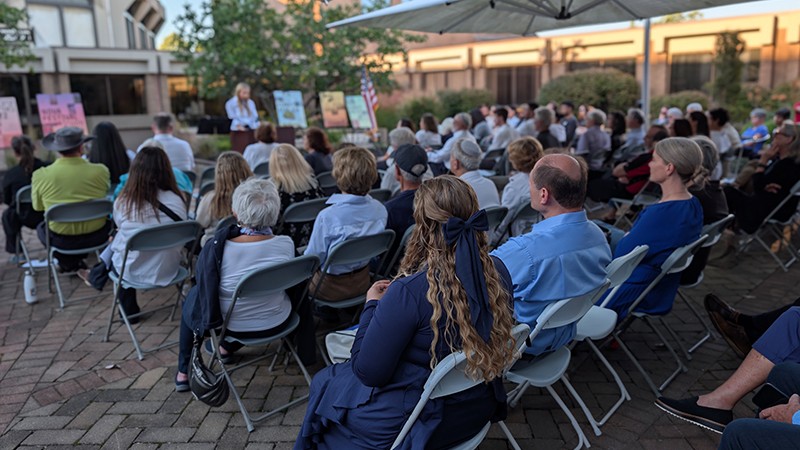
Cincinnati is seeing the same pull. At recent Federation programs, staff have found themselves setting out more chairs and opening partitions to make room as more people continue to show up, including people finding their way into Jewish community for the first time.
“What we’re seeing in Cincinnati is people who feel they have to be careful about being visibly Jewish out in the world, while seeking out Jewish community where they don’t have to start by explaining why being Jewish matters to them,” said Danielle V. Minson, CEO of the Jewish Federation of Cincinnati. “Sometimes that literally means pulling out more chairs and opening the room. What brings people back is feeling known, welcomed, and wanted. Our job is to make room for every person who walks in.”
JFNA's research points in the same direction. People who stayed engaged most often described informal discussions, social events, and peers who welcomed them as reasons to keep coming back. Clergy and staff can open the door, JFNA found, but belonging often grows through the friends and volunteer leaders who welcome someone back.
Brett Sugerman moved to Cincinnati in September 2024 knowing almost no one. Since then, she has found a welcoming space in Cincinnati's Jewish community. “As I met friends of friends, my community widened, and through seeing familiar faces and names, I started to feel a sense of belonging,” said Sugerman. Now a new mom, Brett is also part of the Federation's LEAD leadership cohort. “Now, I want the Jewish community to be a place where my son feels like he belongs and is at home, a place that brings him a sense of joy and curiosity and understanding.”
Creating more of those points of connection is central to Cincinnati 2030 Refocused, our community's strategic plan, which prioritizes deeper Jewish engagement among young families, teens, and adults at key moments in their lives.
Feeling welcome inside the Jewish community is only part of what makes people feel secure enough to be themselves. The Federation’s Cohen Family Leaders in Light Institute brings civic, faith, education, and business leaders from across Cincinnati together to learn, build relationships, and have candid conversations across difference.
“Our non-Jewish neighbors have a major role here, too,” Minson said. “We may not always agree, but individual conversations matter. When Jewish Cincinnatians know the people around them would stand with them, they don’t have to choose between being careful and being themselves.”
Jewish Federations of North America's full release on the findings is available here.